A few Sundays ago at each of the services at the Mars Hill Ballard Campus, Mackenzie and I had the honor of sharing about our struggles with infertility and the call God has put on our lives to adopt. It was a very full and emotional day, but we were very thankful to have good friends come to support us throughout the day, which meant so much.
Throughout the day we had several opportunities to talk with couples also struggling with infertility, people who had friends and family members who had adopted or had been adopted, and even a birth mom who had created an adoption plan for her child through Antioch Adoptions.
We’re thankful for the work God is doing in our lives, the ways in which he's comforted us through various people we've met, and the opportunities he’s given us to comfort other people facing similar struggles and decisions.
Showing posts with label infertility. Show all posts
Showing posts with label infertility. Show all posts
Tuesday, September 07, 2010

Wednesday, June 16, 2010
Book Giveaway: "Adopted For Life"
As Mackenzie and I shared, Russell Moore's book, Adopted For Life has been a tremendous resource for us as we've started pursuing adoption. So much so that we wanted to give you all an opportunity to win a free copy.
To enter to win:
To enter to win:
- Visit the Antioch Adoptions website.
- Find the Scripture reference on their homepage. (While you're there, you can also check out some of the amazing stories from this ministry and learn how you can help support them.)
- Email that Scripture reference to me at cliffe@marshillchurch.org and include "Book Giveaway" in the subject. One entry per person.
Wednesday, May 19, 2010
Rejoice With Those Who Rejoice
A few months ago, as I was driving to work on the West Seattle Bridge, I had a crystal clear vision of Mackenzie and me standing on the stage at the Ballard campus dedicating our adopted child. What's strange is that I hadn't been thinking about adoption at all. I was just driving to work, listening to the radio, and thinking through my coming day. Then, seemingly out of nowhere, this picture popped into my mind.
Well, the floodgates immediately opened and I started bawling uncontrollably to the point that I almost had to pull over, which if you've been on the West Seattle Bridge, you know is nearly an impossible feat.
I'd never experienced anything like this before. Where had this come from and why had it come now? To be sure, adoption had been and continues to be a prominent topic of conversation for Mackenzie and me, so it was definitely on my mind. But until that point, our conversations had centered around the immediate next steps--not the hoped for eventual outcome and what that would entail.
It was clear that God was giving me a glimpse of what he had in store for us. He was showing me that being parents means more than just passing on our DNA; it means raising our children to know, honor, obey, and love Jesus. That's why we dedicate babies--not to secure their salvation (only Jesus can do that), but to promise to love and lead them in a way that points them to Jesus. In turn, our church family promises to support, encourage, and help us as we raise our children.
Mars Hill typically does baby dedications on Mother's Day and Father's Day, so two weeks ago, we watched twenty families at the Ballard campus stand before the congregation, introduce their child, read a few verses they had selected for him/her, and pray that God would help them raise their children in a way that glorifies Jesus.
It's a cute spectacle to say the least. In true Mars Hill fashion, many of the kids are decked out in Chuck Taylor's and spiky hair, but there's a fair share of pink bows and frilly dresses. Most of the kids either squirm, cry, or grab for the mic as their parents try to read their selected verses. Some of the kids even helped lead worship this year.
This year at the end of the service, Pastor Bill Clem, our campus pastor, acknowledged that for couples like us struggling with infertility or those who have experienced miscarriages, Mother's Day and Father's Day can be difficult emotionally. But he encouraged us to "Rejoice with those who rejoice," just as we would "weep with those who weep" (Romans 12:15). And as Mackenzie shared, by God's grace, we were able to do just that. We're thankful for how God has blessed so many families in our church and hopeful for the day we, too, will stand before our church and dedicate our child to the Lord.
Well, the floodgates immediately opened and I started bawling uncontrollably to the point that I almost had to pull over, which if you've been on the West Seattle Bridge, you know is nearly an impossible feat.
I'd never experienced anything like this before. Where had this come from and why had it come now? To be sure, adoption had been and continues to be a prominent topic of conversation for Mackenzie and me, so it was definitely on my mind. But until that point, our conversations had centered around the immediate next steps--not the hoped for eventual outcome and what that would entail.
It was clear that God was giving me a glimpse of what he had in store for us. He was showing me that being parents means more than just passing on our DNA; it means raising our children to know, honor, obey, and love Jesus. That's why we dedicate babies--not to secure their salvation (only Jesus can do that), but to promise to love and lead them in a way that points them to Jesus. In turn, our church family promises to support, encourage, and help us as we raise our children.
Mars Hill typically does baby dedications on Mother's Day and Father's Day, so two weeks ago, we watched twenty families at the Ballard campus stand before the congregation, introduce their child, read a few verses they had selected for him/her, and pray that God would help them raise their children in a way that glorifies Jesus.
It's a cute spectacle to say the least. In true Mars Hill fashion, many of the kids are decked out in Chuck Taylor's and spiky hair, but there's a fair share of pink bows and frilly dresses. Most of the kids either squirm, cry, or grab for the mic as their parents try to read their selected verses. Some of the kids even helped lead worship this year.
This year at the end of the service, Pastor Bill Clem, our campus pastor, acknowledged that for couples like us struggling with infertility or those who have experienced miscarriages, Mother's Day and Father's Day can be difficult emotionally. But he encouraged us to "Rejoice with those who rejoice," just as we would "weep with those who weep" (Romans 12:15). And as Mackenzie shared, by God's grace, we were able to do just that. We're thankful for how God has blessed so many families in our church and hopeful for the day we, too, will stand before our church and dedicate our child to the Lord.
Tuesday, May 11, 2010
Language Land Mines
I've often felt that political correctness is politeness run amok--especially since politically correct terms seem to change on a daily basis. I don't enjoy the feeling of cautiously tip-toeing through conversations afraid to step on language land mines.
But being a recovering English geek, I am aware of what people say, how they say it, and how both effect the people to whom they're saying it. I want my speech to be edifying, not offensive (Ephesians 4:29).
And I've become even more aware of this as Mackenzie and I have shared our struggles with infertility and our pursuit of adoption. There's an element of vulnerability involved in both cases, and what people say and how they say it can have a significant impact.
With infertility, it's a matter of people wanting to ask questions and offer encouragement, but not really knowing how to do either without prying or somehow offending us. In terms of prying, we generally assure people that we're open to answer any questions and to share as many or as few details as they're comfortable with.
The encouragement piece is a little trickier. In most cases, the people offering encouragement are ones we love and who love us; consequently, they don't like seeing us hurting and want to assure us that everything will work out. This last part is true, but how everything will work out might be different than they or we think. I'm hesitant to share specific examples of the things people have said because I know they meant well, but I do want to reiterate that our hope is in Jesus and what he's done for us on the cross (namely, saving us from our sins and restoring our relationship with God the Father), not our ability to get pregnant.
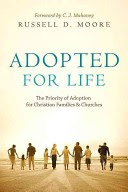 What Mackenzie and I are currently working through is the language we'll use if/when we adopt. Russell Moore's book, Adopted For Life, (one that we both highly recommend) has been greatly helpful in this. He and his wife adopted two boys from Russia who were born three weeks apart, but not from the same biological parents. Moore explains in chapter two that one of the most common questions people asked him and his wife was "Are they brothers?" And each time someone asked them, he would emphatically reply, "Yes, they are."
Now to be sure, he knew what they meant. He knew it was a well intended question to learn more about the boys and their origins. But more importantly, he knew how essential it was for the boys to know that through adoption, they were in fact brothers--not to mention his sons.
That's one of the most beautiful things about adoption. People with no natural, genetic relationship are transformed into a family. And what's better is that this is a picture of our renewed relationship with God through his Son, Jesus. The Apostle Paul uses the image of adoption to explain the Gospel in several places: Ephesians 1:3-14, Galatians 4:3-7, and Romans 8:12-17.
In another chapter Moore stresses that "adopted" is a past-tense verb, not an adjective. He explains that "the term 'adopted kid' assumes an ongoing difference, something that differentiates him from a 'regular kid.'" But adoption is an act that happened in the past; it doesn't define a child anymore than being born premature makes a child the "premature kid" (to use another one of Moore's examples). Adoption is a part of their story, not their identity.
I don't share all of this with you so you'll watch what you say when you're around us, but to share with you what we've learned these past few months--how infertility and adoption are far different from what we could have ever imagined (and we're just getting started with the latter). Neither fit well into the plan we had for our family. But we've started to realize that this isn't Plan B; this is what God intended for us all along. And throughout this experience, we expect to learn things about him and ourselves that we never would have otherwise.
But being a recovering English geek, I am aware of what people say, how they say it, and how both effect the people to whom they're saying it. I want my speech to be edifying, not offensive (Ephesians 4:29).
And I've become even more aware of this as Mackenzie and I have shared our struggles with infertility and our pursuit of adoption. There's an element of vulnerability involved in both cases, and what people say and how they say it can have a significant impact.
With infertility, it's a matter of people wanting to ask questions and offer encouragement, but not really knowing how to do either without prying or somehow offending us. In terms of prying, we generally assure people that we're open to answer any questions and to share as many or as few details as they're comfortable with.
The encouragement piece is a little trickier. In most cases, the people offering encouragement are ones we love and who love us; consequently, they don't like seeing us hurting and want to assure us that everything will work out. This last part is true, but how everything will work out might be different than they or we think. I'm hesitant to share specific examples of the things people have said because I know they meant well, but I do want to reiterate that our hope is in Jesus and what he's done for us on the cross (namely, saving us from our sins and restoring our relationship with God the Father), not our ability to get pregnant.
What Mackenzie and I are currently working through is the language we'll use if/when we adopt. Russell Moore's book, Adopted For Life, (one that we both highly recommend) has been greatly helpful in this. He and his wife adopted two boys from Russia who were born three weeks apart, but not from the same biological parents. Moore explains in chapter two that one of the most common questions people asked him and his wife was "Are they brothers?" And each time someone asked them, he would emphatically reply, "Yes, they are."Now to be sure, he knew what they meant. He knew it was a well intended question to learn more about the boys and their origins. But more importantly, he knew how essential it was for the boys to know that through adoption, they were in fact brothers--not to mention his sons.
That's one of the most beautiful things about adoption. People with no natural, genetic relationship are transformed into a family. And what's better is that this is a picture of our renewed relationship with God through his Son, Jesus. The Apostle Paul uses the image of adoption to explain the Gospel in several places: Ephesians 1:3-14, Galatians 4:3-7, and Romans 8:12-17.
In another chapter Moore stresses that "adopted" is a past-tense verb, not an adjective. He explains that "the term 'adopted kid' assumes an ongoing difference, something that differentiates him from a 'regular kid.'" But adoption is an act that happened in the past; it doesn't define a child anymore than being born premature makes a child the "premature kid" (to use another one of Moore's examples). Adoption is a part of their story, not their identity.
I don't share all of this with you so you'll watch what you say when you're around us, but to share with you what we've learned these past few months--how infertility and adoption are far different from what we could have ever imagined (and we're just getting started with the latter). Neither fit well into the plan we had for our family. But we've started to realize that this isn't Plan B; this is what God intended for us all along. And throughout this experience, we expect to learn things about him and ourselves that we never would have otherwise.
Saturday, May 08, 2010
The Difficulty of Mother's Day
Last year was the first Mother's Day in my life where I had a desire to be a mom, was actively trying to become a mom, yet was not a mom. It was the first Mother's Day where I felt an ache for a child.
This year marks the second such Mother's Day. I still have a deep desire to be a mom, which I know comes from the Lord, but much is different this year.
This year marks the second such Mother's Day. I still have a deep desire to be a mom, which I know comes from the Lord, but much is different this year.
- This year I know that the road to motherhood will look different for me than I once thought.
- This year my heart grieves for other women who desire to be mom's, yet aren't.
- This year I have a deeper understanding of God's plan for my life and the peace that can be found in trusting that His plan is far greater than my own.
- This Mother's Day we feel a profound call to adopt children, and I am thankful for the deep sense of direction that provides.
I have a friend who shared with me early in our struggle with infertility that it is possible to feel two emotions at one time: to rejoice with others, but still feel a longing within yourself. This is where I am this Mother's Day--rejoicing in the gift of motherhood, thankful for my mom and friends who are moms, sad that we are not yet parents, but praying that God would bless us with a child according to His perfect plan.
Jeremiah 29:11 - "For I know the plans I have for you," declares the LORD, "plans to prosper you and not to harm you, plans to give you hope and a future."
Monday, April 19, 2010
People God Brings
“Blessed be the God and Father of our Lord Jesus Christ, the Father of mercies and God of all comfort, who comforts us in all our affliction, so that we may be able to comfort those who are in any affliction, with the comfort with which we ourselves are comforted by God.” -2 Corinthians 1:3-4
I’m sure it wouldn’t be a surprise for me to tell you that there have been some pretty low, lows over the last few months, but you might be surprised to know that we’ve also experienced some of the most encouraging moments as well. We have been amazed at the peace we have that comes only from God, but also the people God has brought into our lives.
On Thursday, March 18, Cliff and I had an appointment with a doctor at the University of Washington. After discussing the results from Cliff's most recent round of tests, he gave us a treatment plan, which included putting Cliff on some medication, putting me on some medication, and scheduling follow up appointments with him and with a local fertility clinic. We left assuming that we’d move forward. Why wouldn’t we? We had said we wanted to do some of these treatments, the doctor felt like they could work, they weren’t as expensive as some of the other options, etc.
But frankly, we left feeling overwhelmed and unsure. We prayed and asked others to pray with and for us, that God would make clear to us His plan—seek medical intervention, seek adoption, or do both simultaneously. We decided to take until Monday to fill any prescriptions or move forward with any decisions.
On Saturday morning, we typically get together with our community group from church. On this particular Saturday, a new family walked in the door: mom, dad, and daughter. We welcomed them, learned their names, and were excited they’d joined us. As we began talking, I shared that Cliff and I were facing infertility, were praying about whether to pursue adoption or seek medical intervention, and that we were praying for people to speak into this decision.
At that point, the wife from the new couple, said, “We adopted our daughter three years ago.” She went on to tell us that she previously worked for an adoption agency and has been praying for a couple to walk through adoption with.
God answered our prayers. He didn’t answer our prayer by audibly speaking to me, but He answered it by strategically placing a family in our life to comfort us, provide wisdom, and encourage us through the complex process of adoption.
It is moments like this that remind me that nothing is coincidental...nothing.
I am so thankful that God has a plan—a plan that is far greater than our own.
I am so thankful for new friends (and “old” friends alike).
I am so thankful for people to speak into our life from their own personal experiences.
I am so thankful that God uses the trials of life to bless others.
We feel quite blessed to see God at work in such a powerful way.
I’m sure it wouldn’t be a surprise for me to tell you that there have been some pretty low, lows over the last few months, but you might be surprised to know that we’ve also experienced some of the most encouraging moments as well. We have been amazed at the peace we have that comes only from God, but also the people God has brought into our lives.
On Thursday, March 18, Cliff and I had an appointment with a doctor at the University of Washington. After discussing the results from Cliff's most recent round of tests, he gave us a treatment plan, which included putting Cliff on some medication, putting me on some medication, and scheduling follow up appointments with him and with a local fertility clinic. We left assuming that we’d move forward. Why wouldn’t we? We had said we wanted to do some of these treatments, the doctor felt like they could work, they weren’t as expensive as some of the other options, etc.
But frankly, we left feeling overwhelmed and unsure. We prayed and asked others to pray with and for us, that God would make clear to us His plan—seek medical intervention, seek adoption, or do both simultaneously. We decided to take until Monday to fill any prescriptions or move forward with any decisions.
On Saturday morning, we typically get together with our community group from church. On this particular Saturday, a new family walked in the door: mom, dad, and daughter. We welcomed them, learned their names, and were excited they’d joined us. As we began talking, I shared that Cliff and I were facing infertility, were praying about whether to pursue adoption or seek medical intervention, and that we were praying for people to speak into this decision.
At that point, the wife from the new couple, said, “We adopted our daughter three years ago.” She went on to tell us that she previously worked for an adoption agency and has been praying for a couple to walk through adoption with.
God answered our prayers. He didn’t answer our prayer by audibly speaking to me, but He answered it by strategically placing a family in our life to comfort us, provide wisdom, and encourage us through the complex process of adoption.
It is moments like this that remind me that nothing is coincidental...nothing.
I am so thankful that God has a plan—a plan that is far greater than our own.
I am so thankful for new friends (and “old” friends alike).
I am so thankful for people to speak into our life from their own personal experiences.
I am so thankful that God uses the trials of life to bless others.
We feel quite blessed to see God at work in such a powerful way.
Wednesday, April 14, 2010
Book Recommendation: Hannah's Hope
 In mid-January when we were right at the beginning of learning about the severity of our infertility, I did an online search for resources written by Christian women who had experienced infertility. This book was mentioned on almost every blog, so I went ahead and purchased it. I am very thankful I did.
Hannah's Hope is written by Jennifer Saake, a woman who has experienced ten miscarriages and failed adoptions. She and her husband created a nonprofit organization, Hannah's Prayer Ministries, to help couples struggling with infertility, miscarriage, and adoption loss. She deeply and personally understands these painful struggles.
As you can probably assume from the title, the author frames her book around Hannah from the Bible. Hannah is a woman deeply saddened by her inability to conceive. 1 Samuel 1-2 tells the story of God's work in her life. Ultimately, Hannah does give birth to a son, Samuel, whom she gives over to the Lord. Samuel came into existence according to God's perfect plan for his life as well as for Hannah's.
One thing I really appreciated about this book is that Mrs. Saake emphasized the fact that God does allow some couples struggling with infertility to become pregnant; however, that is not always the way God answers the desire for children. Some couples have the honor of adopting children, and others choose to love the children of friends and family. I appreciated at one point in the book she mentioned that, "God may surprise you by the ways He answers your heart's cry." Even though we may be surprised by His plan, it is ultimately far greater than our own.
In this book, Mrs. Saake addresses the anger, sadness, and hope that sometimes come with struggling to have a child. As she writes, she does so from personal experience, but more notably using biblical truth.
One section of this book that could be very helpful for many people is the section at the end of each chapter entitled "Burden Bearers." This section is written for friends, family, and church leaders who are supporting or counseling people struggling with infertility. Each section offers useful tips about what to say and what might be hurtful, whether intended or not.
I would most definitely consider this book a "must read" for anyone who has a friend or family member dealing with infertility, anyone who has walked the road of infertility, or anyone who counsels people struggling with infertility. While the cover of the book is distinctly feminine, Cliff initially read the book to gain a deeper understanding into what I might be feeling, but found it incredibly helpful for himself.
Apart from Scripture, this book has been the most helpful to me in our struggle with infertility.
Subscribe to:
Posts (Atom)